The Patient Art
On a Highland hillside, the ability to see without being seen was once a means of survival, then a sporting accomplishment, and eventually a military asset. The history of stalking runs through all three, bound together by an exacting understanding of ground, weather and the limits of human judgement.
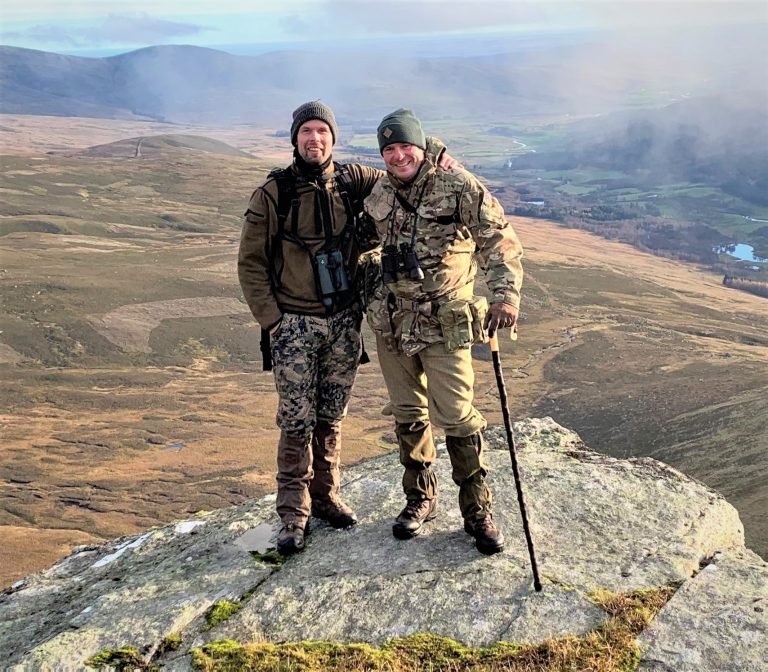
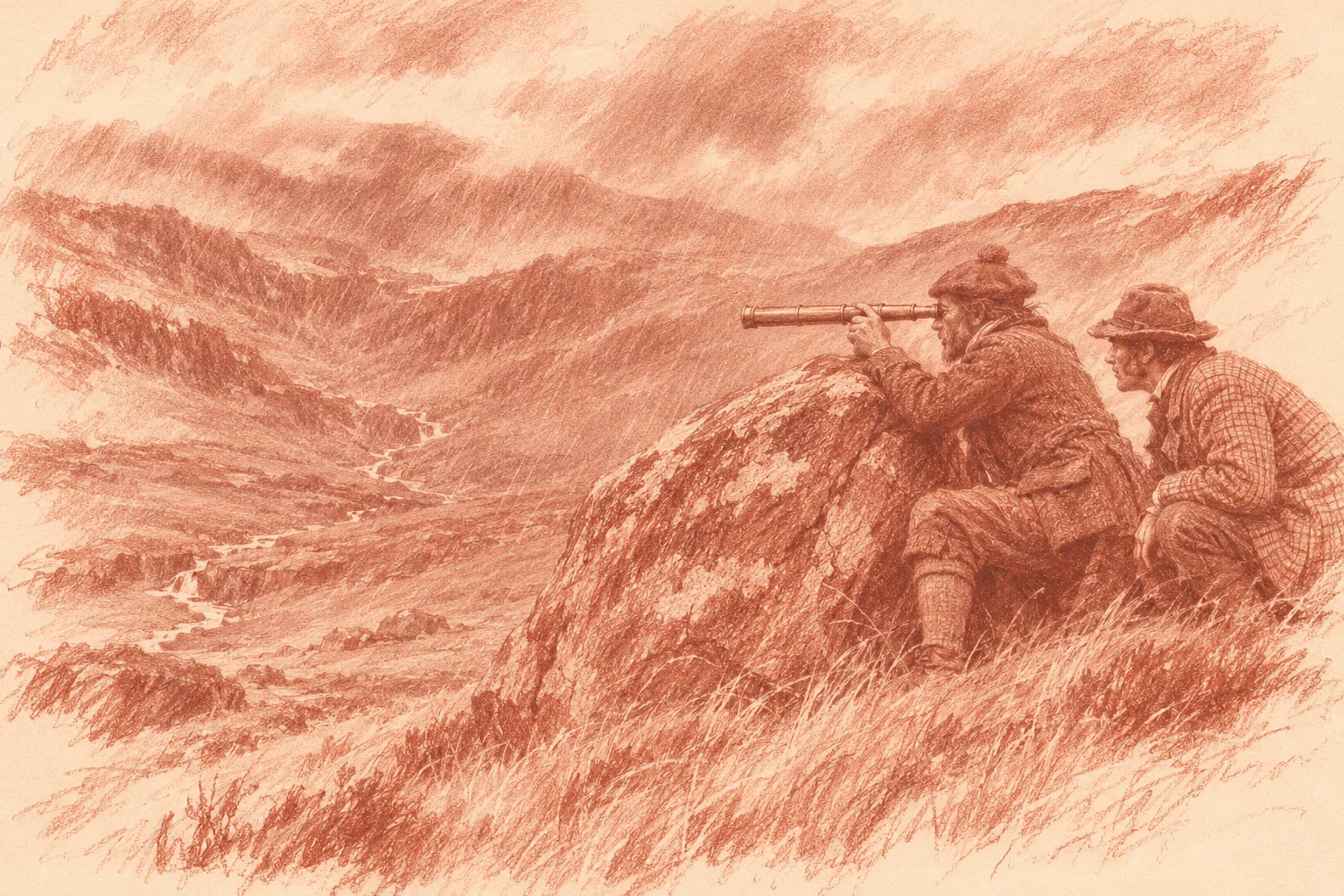
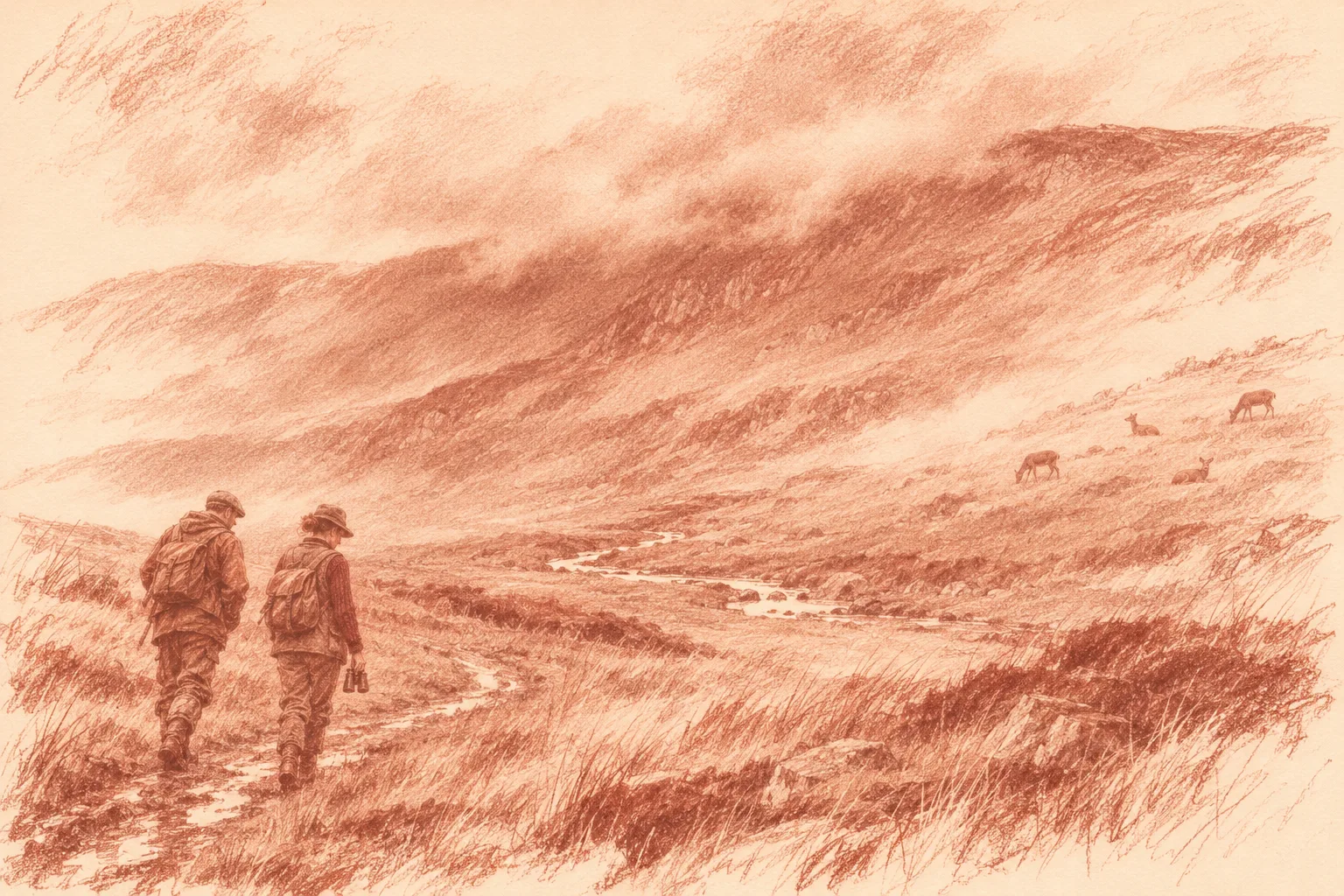
The wind is coming over the ridge in uneven breaths. Down in the corrie, a burn shows briefly between the peat banks before disappearing beneath a fold of ground. Through the glass, what appeared to be a stone has acquired an ear. Beside it, another hind raises her head. The stalker settles the telescope, looks for a long time and finally turns away from the obvious route.
There follows a descent that seems to surrender every yard gained on the climb. A shoulder of hill intervenes. The air changes. Later, with cold water finding its way through the heather, progress becomes a matter of inches. The deer remain somewhere ahead, carrying on with their morning.
Much of stalking takes place in this interval between seeing and arriving. A person must understand what the deer can detect, what the ground permits and what the weather is doing now. Physical effort supplies only part of the answer. The rest comes from attention.
Across centuries, that attention became an extraordinary rural expertise. Highland stalkers refined it through their working lives. Sporting writers committed parts of it to print. When Britain went to war, soldiers discovered how much these men already knew.
I. The Highland crucible
Before the sporting forest
Hunting lies deep in Scotland’s human history. The chipped stone and traces of occupation at Mesolithic sites such as Kinloch on Rum belong to communities whose lives depended on understanding the resources around them. Their landscapes, weapons and purposes differed greatly from those of the modern stalking estate. Yet finding animals, anticipating their movements and approaching within reach demanded observation long before anyone wrote a sporting manual.
Later Highland deer hunting could be a formidable communal undertaking. The tinchel brought together a wide circle of men who gradually drove deer towards waiting hunters or constricted ground. Organising it demonstrated authority over land and labour as well as access to venison. The surviving accounts describe a scale of preparation quite unlike the quiet departure of a stalker and guest from a lodge.
During the eighteenth and nineteenth centuries, stalking on foot acquired increasing prominence. The development of sporting estates, improvements in firearms and the growth of a wealthy visiting clientele helped establish the professional stalker’s role. The Scottish deer forest became familiar in sporting literature. Its name could encompass extensive open hill, with trees occupying only a fraction of the ground.
This transformation belonged to a complicated social history. Sheep farming, changing ownership, depopulation and sporting investment reshaped the Highlands in different combinations. The apparent solitude of a glen might conceal the remains of a township. Equally, the expertise that sustained the sporting estate resided in working people whose knowledge of weather, animals and place was exceptionally precise.
The hill goes into print
William Scrope’s The Art of Deer-Stalking, first published in 1838, gave this world an enduring literary form. His account of sport in Atholl joined natural history, local tradition and the physical business of approaching deer. Landscape is active throughout. Burns, rocks and corries determine what the party can attempt, while the telescope continually interrupts the journey with fresh information.
Scrope also preserved something of the relationship between visiting sportsman and experienced hillman. A guest might possess the rifle and command the leisure. The local professional supplied the understanding that made an approach possible. Behind the nineteenth-century language lies a familiar experience for anyone guided on the hill. The stalker has seen a route where the visitor saw a view.
Alexander MacRae’s A Handbook of Deer-Stalking, published in 1880 with an introduction by Horatio Ross, brought a working forester’s perspective to instruction. MacRae had served Lord Henry Bentinck. He wrote for the inexperienced sportsman, approaching the subject with the authority of repeated encounters with deer in difficult ground.
Ross identified the recurring difficulty in a sentence that could still be spoken beside a Highland burn.
“wind is the great difficulty in getting at deer.”
The handbook’s discussions of side winds, broken ground and changing currents show how much qualification lies behind apparently simple advice. A route must remain adaptable. MacRae understood that an approach could leave even an experienced stalker somewhere awkward, with little freedom to change course. His reader is being taught judgement under changing conditions.
II. The anatomy of fieldcraft
The wind at the deer
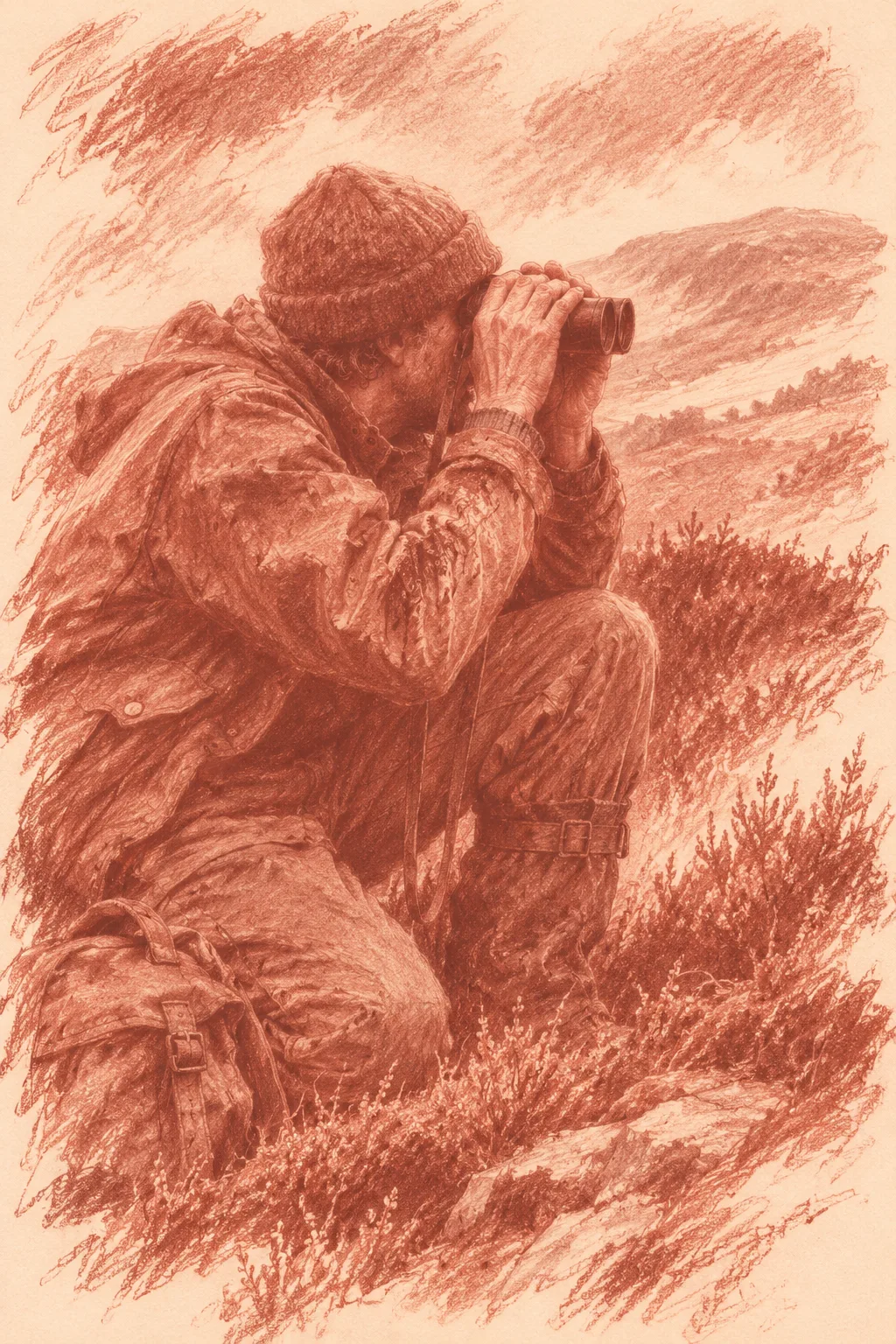
A favourable breeze at the lodge is useful information for very little time. On the hill, air meets ridges, enters gullies and moves around shoulders of ground. A strong wind can be reasonably consistent across an open face, then turn unexpectedly behind an obstruction. In woodland, shelter, openings and uneven ground complicate the picture further. The relevant question is where a person’s scent will travel in relation to the deer.
Local heating adds another influence. Sunshine can warm a slope and encourage air to rise along it. Cooling ground can favour downslope movement. These effects interact with the wider weather, cloud and the shape of the valley. The neat rule learnt beside the vehicle must survive the less orderly conditions encountered above it.
The experienced stalker keeps reassessing. Movement in grass, the behaviour of light vegetation and small changes felt on the face contribute to a developing judgement. The route that looked promising twenty minutes earlier may need abandoning. Scent discipline consequently begins with respecting the wind. Clothing and washing products occupy a much smaller place in the calculation.
There is humility in this. A person can make a long, competent approach and lose it to a current carrying round an unseen shoulder. The deer’s abrupt attention may provide the first clear evidence that conditions have changed. The hill has offered a correction.
The patient glass
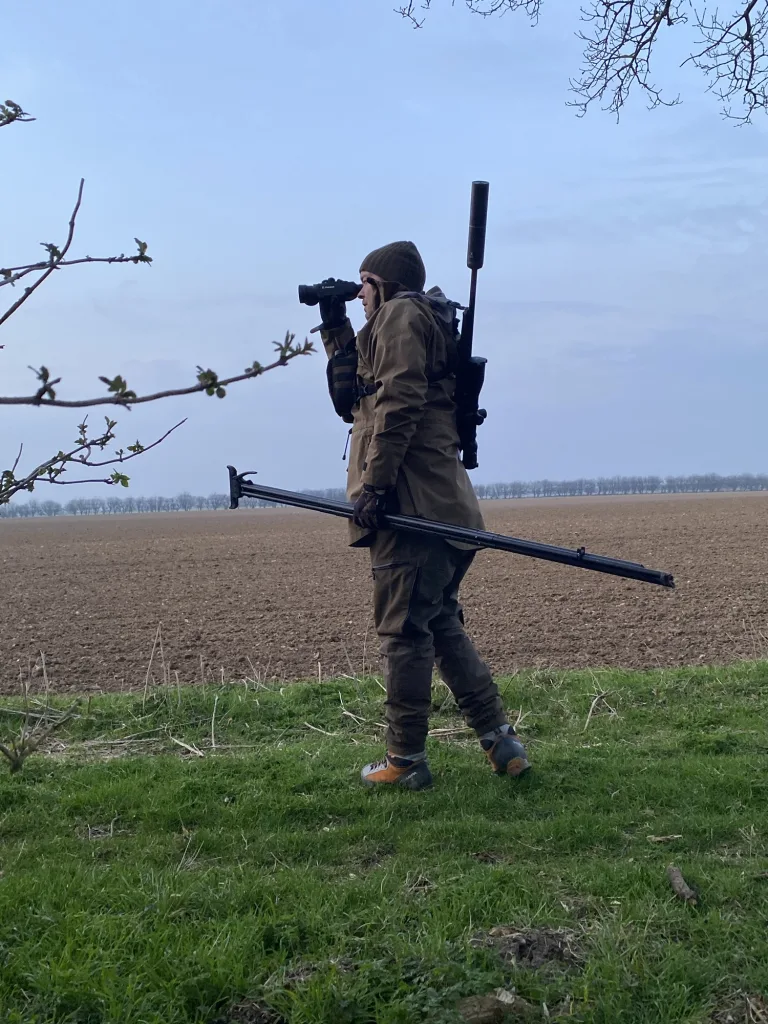
The finest stalking optics are useful only when someone has learnt to look. At first, the hillside appears empty. With time, familiar shapes separate into heather, stone, shadow and animal. A small movement confirms what a patch of colour merely suggested. The eye begins to recognise how deer occupy the ground.
Binoculars allow the stalker to examine broad areas comfortably. The traditional draw-telescope provides a closer view for prolonged assessment, often supported against a rock or other steady rest. Both belong to observation. Identifying deer through a rifle’s sight confuses a separate and consequential stage of the stalk with the work of finding them.
Look at the whole group. A conspicuous stag can absorb a visitor’s attention while hinds lying farther across the slope remain unnoticed. Their position may determine whether an approach is possible. Watching also reveals whether animals are feeding, settled or uneasy, and whether their movement is likely to change the problem.
The time spent looking is part of the day’s effort. It may save a needless climb, expose a concealed difficulty or establish that the animal first noticed is unsuitable for the intended cull. A hillside examined patiently becomes a much more informative place.
Ground seen from the other side
Dead ground is land hidden from a particular viewpoint. A shallow fold that looks insignificant from above may screen an approaching party from deer below. A prominent bank can provide surprisingly little concealment if an animal lies higher on the opposite slope. Everything depends on the relationship between the two positions.
For the stalker, this requires a second reading of the landscape. A direct route may cross open ground visible to the whole group. A longer route through a hollow may offer a better approach, provided the wind, footing and subsequent exit remain suitable. Distance travelled gives a poor measure of progress towards deer.
The smallest features become significant at close quarters. A peat edge, a low ridge of grass or the shoulder of a rock may determine how far a person can move upright. The final approach can require a crawl through wet vegetation, with care for equipment and close attention to the stalker’s directions. Arms and knees discover details that the eye omitted.
Safe rifle handling continues through every change of position and obstacle. So does awareness of the people accompanying the stalk. An approach that demands more physical control than the party can maintain needs reconsidering.
Movement and the human outline
Deer are alert to movement and possess senses well suited to detecting disturbance. A human head appearing against open sky can be conspicuous even when every garment is the correct shade of green. The effectiveness of camouflage depends on the wearer’s position, background and behaviour.
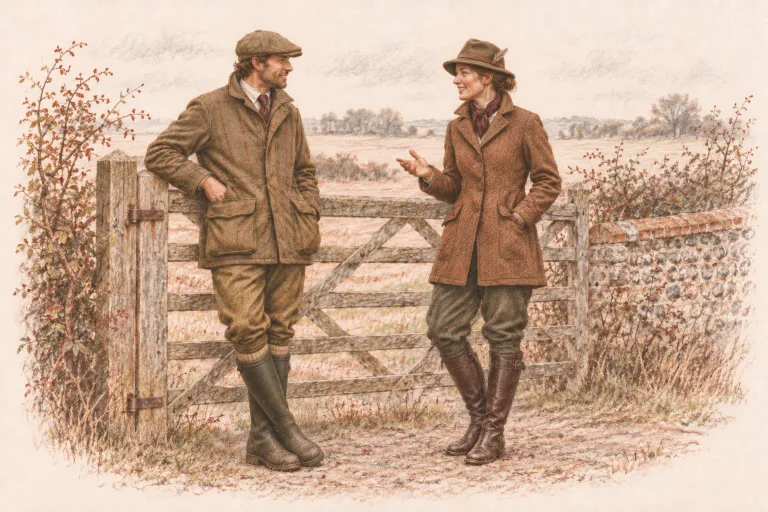
Estate tweeds brought an intelligent response to this problem. Mixed yarns and subdued checks drew on the colours of particular landscapes. Heather, weathered grass and stone could be suggested within one cloth. Modern matte fabrics can serve the same purpose, provided their tone and texture suit the ground.
Loose fittings, hard surfaces and a rustling layer can draw attention during an otherwise careful approach. The stalker learns to consider the complete arrangement, including binoculars, sling and rucksack. Clothing must also permit the movements the ground demands. Much of good equipment becomes noticeable chiefly when it gets in the way.
Moving slowly takes concentration. It becomes harder after a steep climb, when cold hands, fatigue and the excitement of a possible opportunity all compete for attention. Mastery consists partly in preserving a deliberate pace at exactly the moment when impatience feels most persuasive.
III. From the glen to the trenches
Lord Lovat’s particular recruits
The connection between Highland stalking and military service is documented in Lord Lovat’s own correspondence. On 4 January 1900, writing from Beaufort Castle to Aldourie, he explained that the War Office had authorised a corps drawing on a distinctive reservoir of experience.
“stalkers, ghillies & picked men for primarily scouting service in South Africa.”
The letter belongs to the crisis of the Second Boer War. British forces faced opponents whose mobility, marksmanship and familiarity with the country made them difficult to locate and engage. After the reverses of December 1899, Lovat’s proposal offered men accustomed to interpreting large stretches of ground through patient observation.
The Lovat Scouts went to South Africa in March 1900. Their recruits included stalkers, gamekeepers, shepherds and other Highland countrymen. The telescope, experience with ponies and habits of independent judgement were valuable parts of their preparation. Skills acquired while working on sporting estates had become assets the Army sought deliberately.
The transition still required military organisation and training. Knowing the habits of red deer supplied no automatic knowledge of a battlefield. What these men brought was a developed capacity to observe, remember and interpret, reinforced by experience of difficult country.
A profession of observation
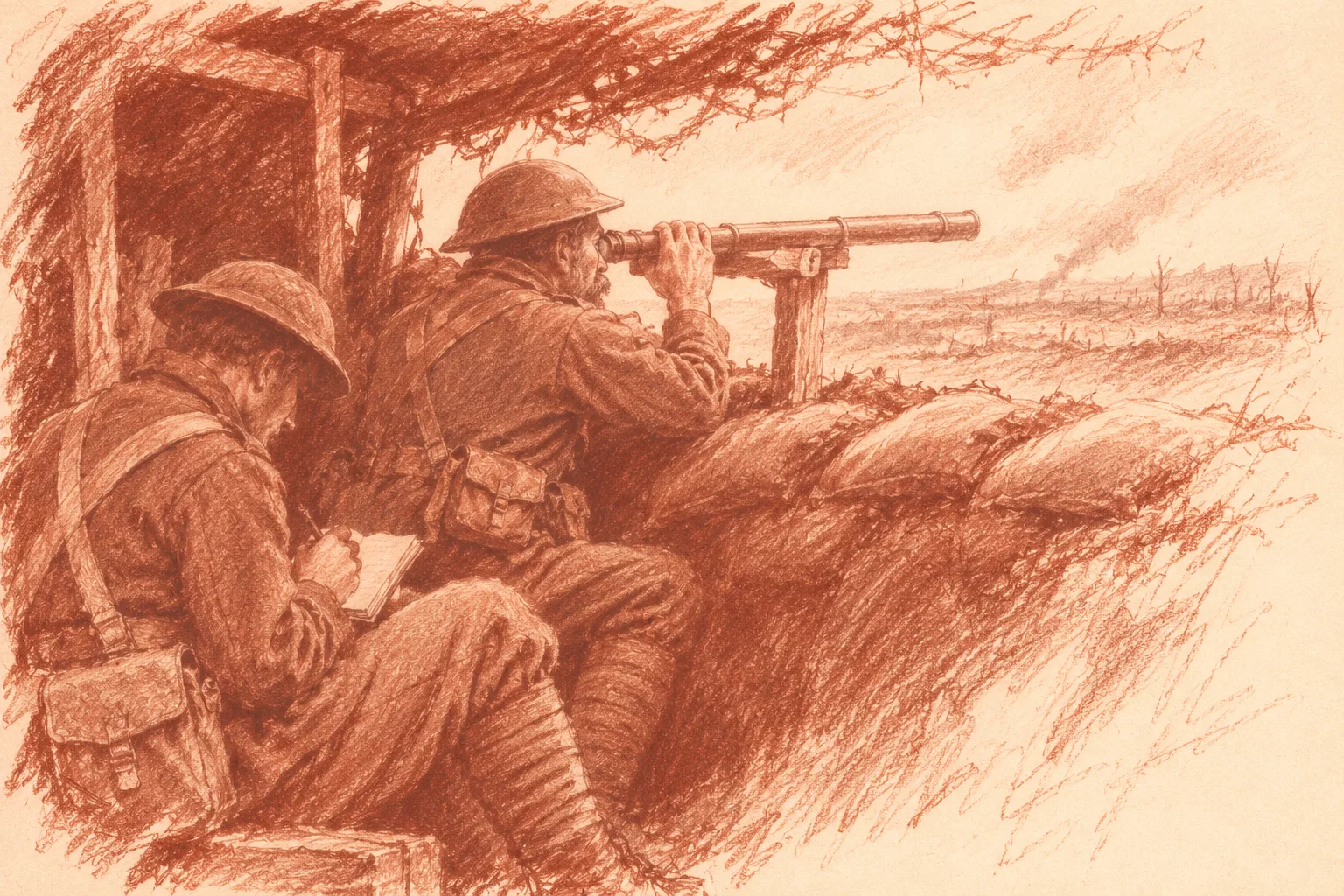
The First World War created a further demand for those abilities. Early German sniping benefited from experienced marksmen and effective optics. British responses developed through several initiatives, including the work of Major H. Hesketh-Prichard, an experienced hunter and traveller who became an influential organiser of specialist training.
By 1916, his First Army School of Scouting, Observation and Sniping was established at Linghem in France. Its title deserves attention. Shooting sat alongside the disciplined work of seeing and reporting. The school helped turn individual aptitude into knowledge that could be taught, assessed and passed on through instructors.
In Sniping in France, published in 1920, Hesketh-Prichard described the contribution of Lovat men to that work. Corporal Donald Cameron joined his staff as an accomplished stalker and telescope observer. Specialist Lovat Scouts Sharpshooter groups served on the Western Front from 1916, and the school trained their reinforcements.
His description of these groups is revealing.
“Every man of these groups was a picked stalker and glassman”
Some proved so valuable at observation that their rifle use was restricted. The name “Sharpshooters” scarcely conveyed the full importance of their employment. Reliable information, accurately observed and communicated, could matter far beyond the position of the man who obtained it.
The Highland influence was therefore carried by people as well as equipment. An experienced glassman brought years of practice in separating a distant suggestion from something he could confidently identify. An army needed that discrimination on an immense scale.
Camouflage and the ghillie inheritance
The ghillie suit became the most recognisable material expression of this association. Regimental and heritage accounts credit the Lovat Scouts with pioneering its military use. Its name preserves the link to Highland estate service, and its irregular appearance develops the countryman’s concern with outline, texture and background.
The familiar story of an unchanged garment passing directly from Victorian stalking hill to modern sniper deserves care. Military camouflage evolved through successive experiments and adaptations to different environments. The evidence supports a significant Highland contribution, particularly through the Scouts, within a much wider history of concealment.
Optical equipment developed too. The stalking telescope supported observation, while a rifle’s telescopic sight served aiming. Their functions were distinct, even when both appeared in the same specialist team. Military instruction formalised observation, estimating distance, the interpretation of ground and concealed movement for its own purposes.
British sniping drew on several traditions and on lessons learnt from its opponents. The Highland contribution has particular force because named men, contemporary accounts and surviving records reveal how working expertise crossed into military service. The connection is substantial enough to need little embellishment.
IV. The discipline of restraint
Keeping command of oneself
A long stalk tests the mind through discomfort. The climb has warmed the body, the wait has chilled it and the final approach has narrowed attention to a small patch of hillside. When the deer becomes visible again, there can be a powerful sense that an opportunity has been earned.
At that point, physical recovery and judgement matter. Breathlessness, fatigue and cold can undermine steadiness. The experienced stalker allows time to settle and recognises when conditions have moved beyond what can be managed reliably. The distance already covered carries no weight in the decision.
Wartime observers likewise required endurance, concentration and emotional control, although their responsibilities belonged to the circumstances of war. The historical resemblance is most evident in sustained attention under pressure. In deer stalking today, that attention serves the welfare of the animal and the proper conduct of the cull.
An animal within a landscape
Modern deer management considers animals, habitats and neighbouring ground together. Selection depends on the management objective, the species and sex concerned, condition and the information available to the stalker. Antlers may attract the visitor’s eye, but their prominence supplies only part of the picture.
The wider work includes assessing browsing pressure, considering woodland recovery, understanding seasonal behaviour and maintaining deer welfare. It often requires cooperation across estate boundaries. The professional stalker’s knowledge remains rooted in place while contributing to decisions made over a much larger area.
At the moment of a possible shot, that broad responsibility becomes exact. The deer must be correctly identified and suitably positioned, the range and conditions within the shooter’s capabilities, and the background safe. An obscured animal, uncertain identification or an unsteady position can end the opportunity. Following up a shot and recovering the carcass properly are integral parts of the work.
This also distinguishes sporting challenge on the hill from any attempt to make the shot itself more difficult. The approach may demand effort and ingenuity. Once a deer has been selected, every reasonable advantage should serve a humane outcome.
Venison gives the work another practical connection to the country. Care of the carcass, extraction and the journey to the larder belong to the same undertaking as the hours behind the glass. The responsibility continues after the hillside has fallen quiet.
The unbroken thread
Returning over the ridge, the corrie looks different. A slope that seemed uniform in the morning now contains the fold that hid the approach, the burn that changed its course and the small rise where the wind became uncertain. The party has acquired a little knowledge of the place. The stalker has added another day to years of it.
For Foyers Sporting, its living value remains in the day on the hill. To watch closely, move thoughtfully and accept the judgement the circumstances require is to take part in that inheritance. Sometimes the lesson comes with a deer brought to the larder. Sometimes it comes in the decision to shoulder the pack and leave the corrie undisturbed.
That is how the craft endures. Books preserve observations, training gives them structure and experienced people show others how to judge the ground in front of them. The history reaches back into hunting for subsistence, through the Highland estate and into military service, gathering different purposes along the way.