
Roe Deer: Pure, Silent, and Unforgettable.
Graceful, alert, and perfectly at home in the patchwork of British countryside, roe deer offer one of the most rewarding stalking experiences in the UK. Whether weaving through quiet woodlands or ghosting along hedgerows at first light, these elegant deer demand stealth, sharp observation, and well-honed fieldcraft. With their elusive nature and keen senses, stalking roe is a test of patience and precision—true fair-chase stalking in its purest form.
British Roe Deer: A Native Icon of the Countryside
The roe deer (Capreolus capreolus) is a graceful and elusive species native to Britain. Often seen at dawn or dusk, these small deer are a familiar but enchanting sight across woodland edges, farmland, and even near urban areas. With a long history in British landscapes, roe deer continue to capture the imagination of nature lovers and wildlife watchers alike.
The British roe deer is the jewel of lowland and woodland stalking—graceful, elusive, and perfectly adapted to the varied landscapes of Britain. Thriving in the patchwork of woodlands, hedgerows, and farmland, these agile deer offer a true test of fieldcraft, patience, and precision. Bucks grow elegant, three-pointed antlers and become highly territorial during the summer rut, circling does in open glades and issuing sharp, bark-like calls as they defend their ground. With keen eyesight, acute hearing, and an instinctive wariness, roe deer present a subtle but rewarding challenge for the skilled stalker. Whether quietly approaching a feeding buck at first light or selecting a doe for careful population management, stalking roe deer is a deeply immersive experience—steeped in tradition and set amidst some of the most quietly beautiful countryside Britain has to offer.
The roe deer is one of only two truly native deer species in Britain, the other being the red deer. Fossil evidence shows that roe deer have roamed British landscapes since the end of the last Ice Age, over 10,000 years ago. However, their history has not been a smooth one.
By the 18th century, roe deer populations had dramatically declined in England and Wales. A combination of deforestation, agricultural expansion, and heavy hunting pressure led to their complete extinction across much of their native range. Only isolated populations in the remote Scottish Highlands managed to survive.
The story changed in the 19th and early 20th centuries, when a series of deliberate reintroductions began. Roe deer were brought back to parts of southern and central England, mainly from Scottish and European stock. These efforts, combined with improved woodland management, a decline in large predators, and changes in land use, allowed populations to bounce back dramatically.
Today, roe deer are one of the most widespread deer species in the UK. They are now firmly established throughout Scotland and most of England, with expanding populations in Wales and some areas of Northern Ireland. In recent decades, their numbers have grown rapidly, particularly in southern and eastern England, where suitable habitats and mild winters support high survival rates.
Modern roe deer have proven incredibly adaptable. They thrive in both rural and semi-urban environments, including parklands, golf courses, and even gardens on the outskirts of towns. As a result, sightings are increasingly common—making roe deer a visible and valued part of Britain’s wildlife heritage once again.
Roe deer are small and elegant. Adults typically stand 60–75 cm at the shoulder and weigh between 10–25 kg. Their coats change with the seasons—reddish-brown in summer and grey-brown in winter. Males (bucks) grow short, three-pointed antlers which they shed annually. A white rump patch and almost invisible tail are key identifying features.
Look out for large, dark eyes, prominent ears, and the distinctive white rump. Bucks become territorial during the summer breeding season (the rut), using scent-marking and loud, bark-like calls to assert dominance and attract mates. Their subtle presence and striking features make them a favourite among wildlife photographers and watchers.
Roe deer leave behind narrow, pointed hoofprints (or slots), typically 3–4 cm in length. They create scrape marks on the ground during rutting season and leave browsing signs on low shrubs and trees. Dung piles are often found in the same spot, another clue that roe deer are nearby.
Roe deer are typically solitary animals, especially outside the breeding season. Males (bucks) and females (does) tend to go their own way, although mothers will remain with their young (kids) for several months after birth. During winter, small loose groups may form temporarily, but roe deer are generally not herd animals like some other deer species.
They are crepuscular in nature—most active during the early morning and late evening hours. This twilight activity helps them avoid both human disturbance and daytime predators. Their movement patterns are quiet and cautious, making them difficult to spot despite being common in many areas.
Roe deer communicate using a variety of sounds. Bucks often make sharp, dog-like barking calls when alarmed or during the rut (breeding season), which peaks in late July and early August. During this time, males become highly territorial, chasing rivals and circling does in a ritual known as “ringing”, which can leave distinct flattened areas of grass or crops.
Females give birth to one to three kids (usually two) in May or June, after a unique reproductive process that includes delayed implantation—where fertilised eggs pause development for several months before attaching to the uterine wall. This ensures that births coincide with the lush vegetation of late spring.
Roe deer are strongly associated with mixed and deciduous woodlands, particularly areas that provide dense cover for shelter and open glades or edges for feeding. However, they are extremely adaptable and have increasingly moved into farmland, heathland, and even suburban environments.
Their ideal habitat includes a mix of woodland and open ground—offering protection from predators and humans, as well as access to varied plant life. Roe deer are browsers, feeding mainly on a wide variety of plants including young shoots, buds, leaves, berries, brambles, and herbs. Unlike grazers such as red deer, they rarely eat large quantities of grass.
Modern landscapes with field margins, hedgerows, young plantations, and overgrown scrub provide excellent habitat. These edge environments—where woodlands meet open land—are perfect for feeding while offering quick access to cover if danger arises.
In increasingly urbanised areas, roe deer have proven remarkably tolerant of human presence, often living close to towns and cities. However, their shy nature means they usually remain hidden unless spotted during quieter hours or by the observant amongst us.
Hunting roe deer in Great Britain plays an important role in wildlife management, conservation, and rural sustainability. While these elegant animals are a treasured part of the landscape, their growing population—especially in areas without natural predators—requires careful and responsible management.
1. Population Control & Ecological Balance
In the absence of natural predators like wolves or lynx (which once roamed Britain but are now extinct), roe deer populations can grow rapidly. If left unmanaged, overpopulation can lead to habitat degradation, particularly in young woodlands and conservation areas where roe deer overbrowse saplings, shrubs, and ground flora.
This overbrowsing not only harms the woodland structure but also affects biodiversity—impacting birds, insects, and other animals that depend on a healthy understorey. Controlled hunting, also known as culling, helps maintain a balance between roe deer and the environment, supporting more diverse and resilient ecosystems.
2. Reducing Agricultural & Forestry Damage
Roe deer frequently venture into farmland, where they can cause significant economic damage by feeding on crops such as cereals, oilseed rape, and vegetables. In young forests and commercial plantations, their feeding can stunt or kill trees, affecting both woodland regeneration and timber value.
Ethical hunting, in coordination with landowners and forestry managers, helps minimise such damage while maintaining sustainable population levels.
3. Promoting Animal Welfare
Although it may seem counterintuitive, selective and humane deer stalking promotes better animal welfare. In overcrowded populations, food becomes scarce, competition increases, and disease is more likely to spread. Weak, injured, or sick animals may suffer unnecessarily.
Skilled deer managers and stalkers use ethical hunting practices to selectively remove individuals in poor condition or to thin populations where needed, helping to ensure that the remaining deer are healthier and better adapted to their environment.
4. Seasonal Venison & Rural Economy
Roe deer hunting also supports the sustainable venison industry. Venison is a high-protein, low-fat, free-range meat that’s gaining popularity as a healthy, locally sourced alternative to farmed meats. When hunted legally and processed correctly, roe venison is both sustainable and environmentally friendly.
In many parts of rural Britain, stalking provides income for landowners, gamekeepers, and small businesses—supporting jobs in wildlife management, hospitality, butchery, and tourism.
5. Cultural & Conservation Role
Deer stalking has deep roots in British countryside traditions, particularly in Scotland and parts of England. Today, responsible hunting is regulated by law and guided by best practices, often in cooperation with conservation organisations.
Modern deer management balances heritage with science—ensuring that roe deer remain a thriving part of Britain’s landscape while safeguarding the health of woodlands and farmland for generations to come.
Woodland Stalking
This is the most traditional and commonly practised method in Britain. The hunter moves quietly through woodland or along field edges, using wind direction, terrain, and natural cover to get close to the deer.
High Seat
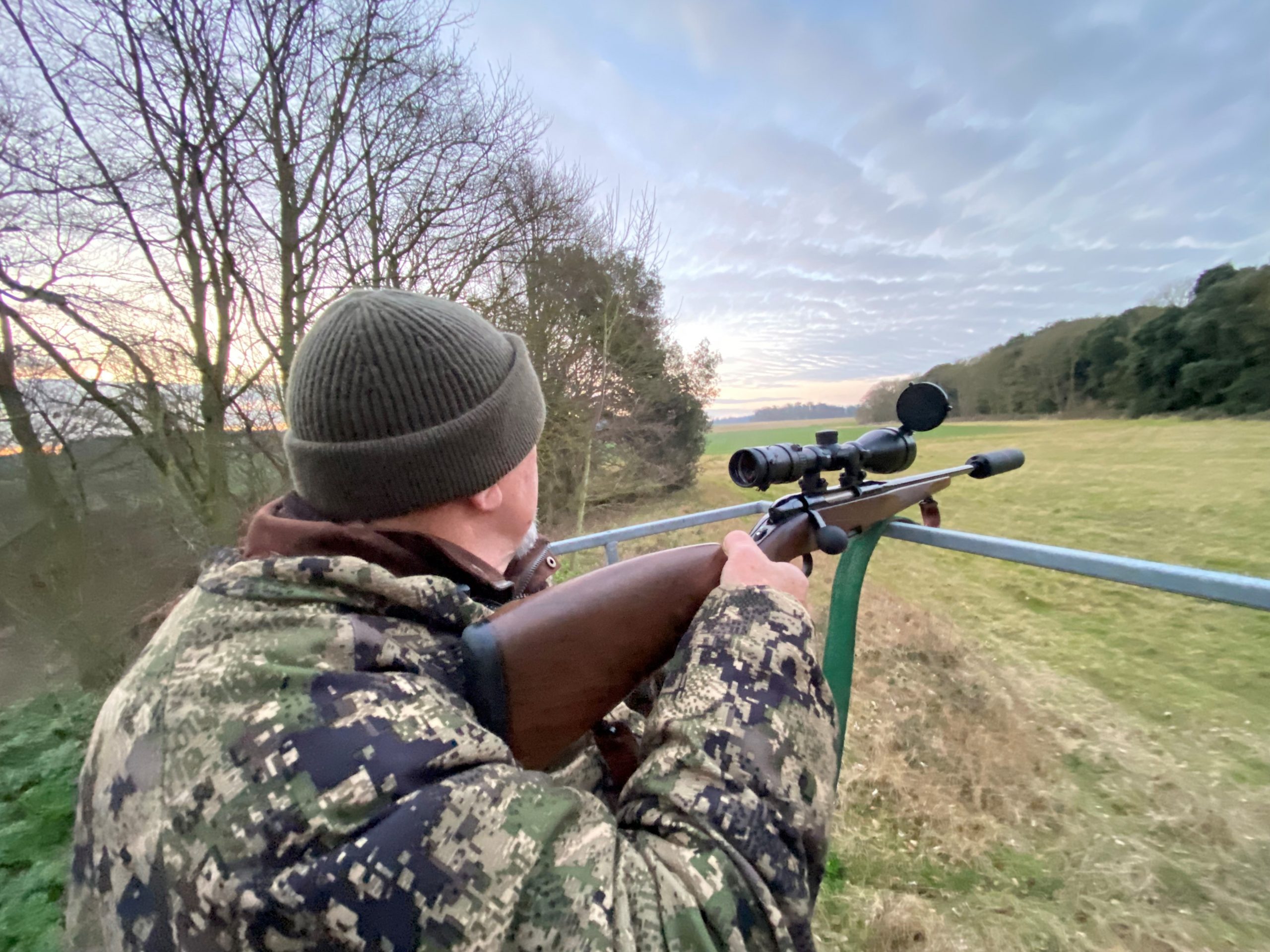
This involves using an elevated stand (a “high seat”) positioned near feeding areas, woodland rides, or field margins. The hunter waits silently for deer to appear, usually at dawn or dusk.
Known feeding spots, crop damage zones, and areas with good visibility but limited ground stalking access.
High seats provide a stable shooting platform and a wide field of view, while minimising ground scent. They’re excellent for selective culling and safe, clean shots.
Clothing & Equipment: Proper clothing is crucial for comfort, warmth, and stealth. Since this is a topic in itself, I have dedicated a separate section to essential gear—refer to the Clothing and Equipment section for a detailed guide.

Recommended Rifle Calibre
.243 with a 70-grain or larger bullet. However, larger calibres are also commonly used, including 308w
and 30-06 with 150-grain bullets

Hunt on foot and High Seat
Hunting Rod Deer in Great Britain
A true test of skill, patience, and precision. Either woodland stalking in England or challenging yourself on foot in the the Highlands of Scotland.

Hunting season
England
Bucks – 1 April – 31 October
Does – 1 November – 31 March
Scotland
Bucks – No Close Season
Does – 21 October – 31 March
Open Seasons may be subject to legislative change