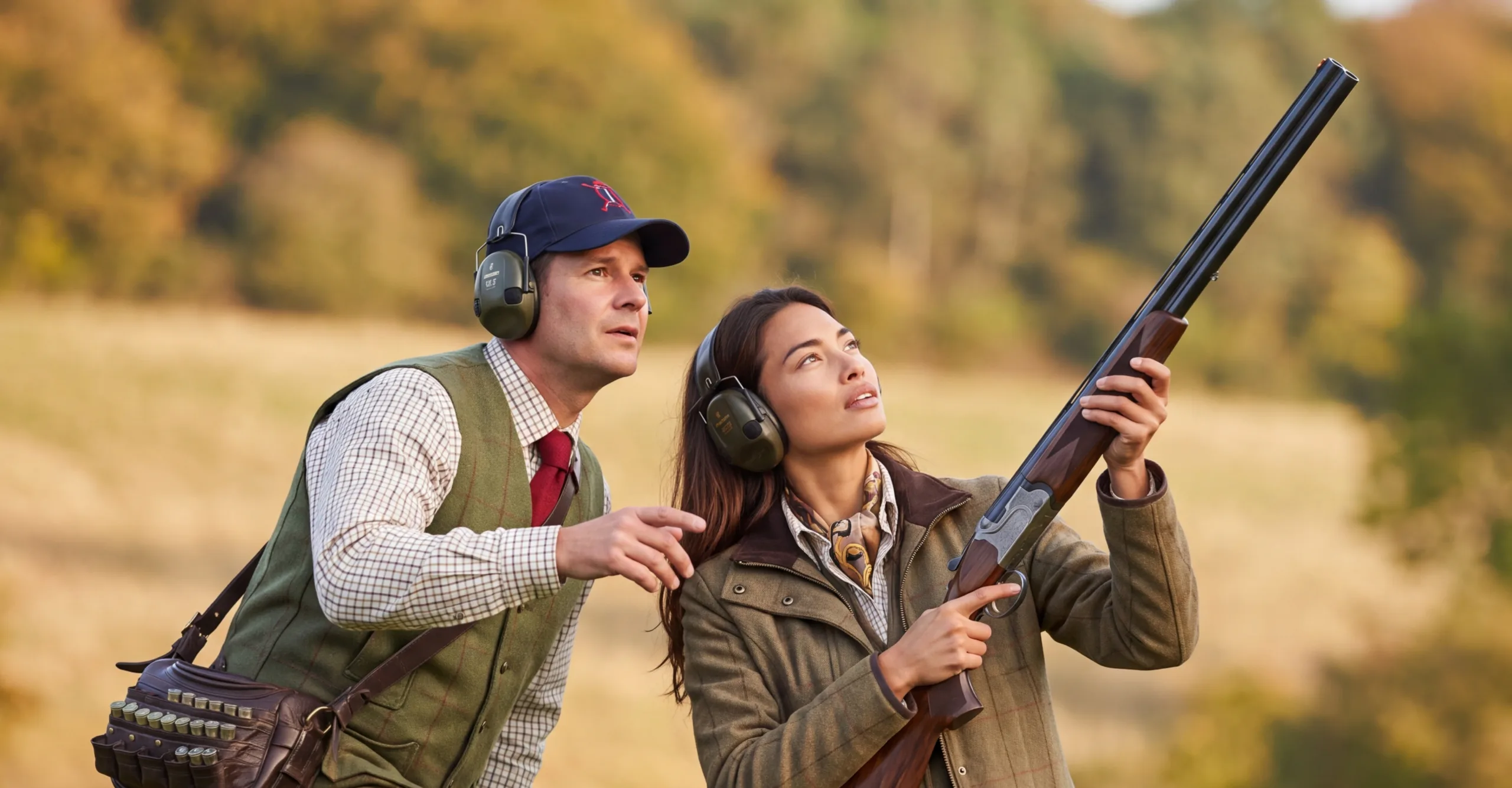
From the first greeting in the courtyard to the keeper’s handshake at dusk, a formal pheasant day depends on an understanding shared by everyone present. Its customs bring order to the field, consideration to the company and a particular pleasure to the sport.
A November frost has silvered the grass beyond the courtyard. Beneath the stable clock, the Guns are gathering with cartridge bags and dogs, exchanging the slightly restrained greetings of people who will be considerably better acquainted by lunchtime. A keeper passes through with a radio. Somewhere behind the buildings, a spaniel has discovered something requiring immediate investigation. The host is counting heads.
In a few minutes, this company will become a line spread across the winter landscape. Each person will have a place, a field of responsibility and neighbours entitled to expect sound judgement. Beaters will be working towards them through cover. Pickers-up will be watching from behind. Much of what makes the day run properly will depend on understandings that scarcely need mentioning among experienced company.
Those understandings form the etiquette of driven shooting. They combine safety, hospitality, sporting restraint and respect for the people whose work makes the day possible. The clothes, the draw and the keeper’s handshake belong to that larger arrangement. A good guest learns how the parts fit together.
I. Dressing for the occasion
The courtesy of country clothes
On a formal driven day, dressing properly begins with acknowledging an invitation. The host has assembled the company, the keeper has prepared the ground, and the beating and picking-up teams have committed their day to making the sport work. Arriving in considered country clothes recognises that effort before a word has been spoken.
The convention resembles that of a good restaurant where a shirt and tie are expected. Paying for dinner sits comfortably alongside respect for the room, the chef and the other diners. Paying for a peg carries the same understanding. One enters an established occasion and observes its manners.
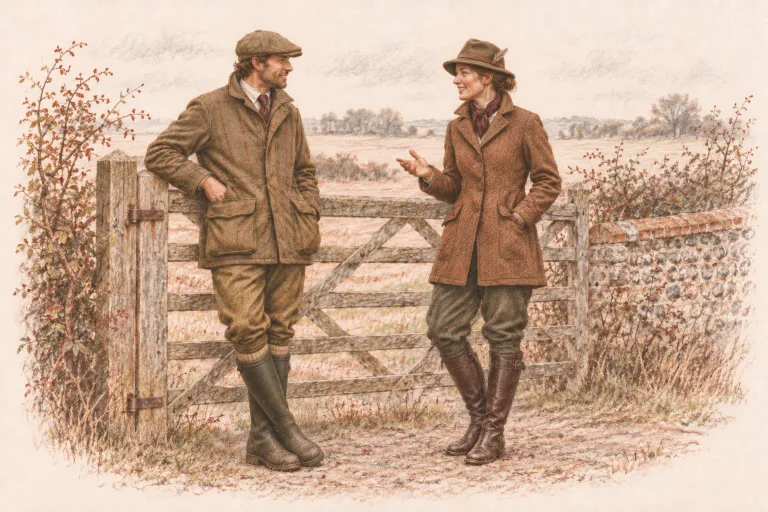
The two-piece or three-piece tweed shooting suit remains a classic expression of this courtesy. Its ancestry lies in nineteenth-century sporting clothes, particularly the Norfolk jacket, with its belt, generous pockets and pleats that accommodated movement. The fuller plus-four silhouette became especially familiar in the interwar years. What now looks formal began as practical dress for leisure in the country.
Jamie’s view on mixing tweeds
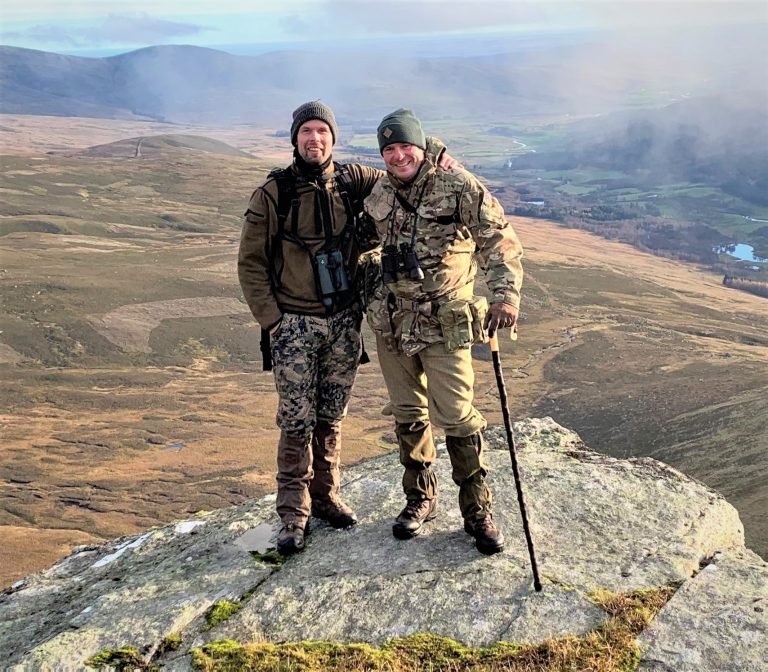
For Jamie of Foyers Sporting, a shooting wardrobe tells the story of a life in the field. His began with a birthday present from his grandmother.
“She gave me a Barbour when I was thirteen,” he recalls. “It was far too big, but I finally grew into it in my twenties. That was the staple of my shooting clothes as a boy, with moleskin breeches and probably a pair of hiking socks. I would find some colourful stocking ties, or make them myself, to make the whole ensemble look half decent. No doubt I borrowed a flat cap from my father that was too big as well. But I wore a shirt and tie. The tie was in my school colours, and it was perfectly good for a boy’s day on a driven shoot.”
The wardrobe grew as he did. Brown brogues and a tweed sports jacket completed his clothes for lunch, while the schoolboy moleskins eventually gave way to woollen tweed breeks. Other pieces arrived through friendship, travel and years spent in the country.
“I have a wonderful Chrysalis shooting coat that some generous owners gave me when I was riding in three-day eventing, and a favourite tweed cap I bought on a trip to France about twenty years ago. My wardrobe is mismatched because it has been contributed to over the decades. All credit to well-crafted clothing.”
That accumulation helps explain his preference for mixing tweeds. He tends to associate a matching tweed with “estate cloth” which he believes should be the uniform of the people who work on the estate. His own breeks will often differ from his jacket and waistcoat, with another tweed in his cap.
“People coming into shooting sometimes think everything ought to match. Then they look along the line at people who have shot all their lives, and find different caps, coats and breeks from several sets of tweed. It can be rather amusing at first. But a lot of us have simply found things we like and kept wearing them.”
Weather and freedom of movement govern what he puts together each morning.
“If it’s cold, I start with merino wool undergarments, then a woollen shirt, tie and waistcoat. With my woollen breeches, favourite old shooting stockings and ties, and lined Aigle boots, I stay warm. Shivering with excitement is one thing. Shivering with cold is no fun at all.
“I also wear leather riding gloves. They’re tactile enough for me to feel the gun and the trigger, and to find cartridges in my pocket when I’m loading for myself. Heavy gloves leave me feeling disconnected from what I’m doing.
“I like the tradition and I like looking smart, but the clothes have to be practical. Even with several layers on, I want to move freely. When I bring the gun to my shoulder, I want to feel it settle and swing naturally, without anything pulling or restricting me. That matters enormously.”
For Jamie, the most useful pieces earn their place over years. The mix of cloths comes naturally when a wardrobe has grown around the person wearing it.
Breeks, stockings and a proper shooting cut
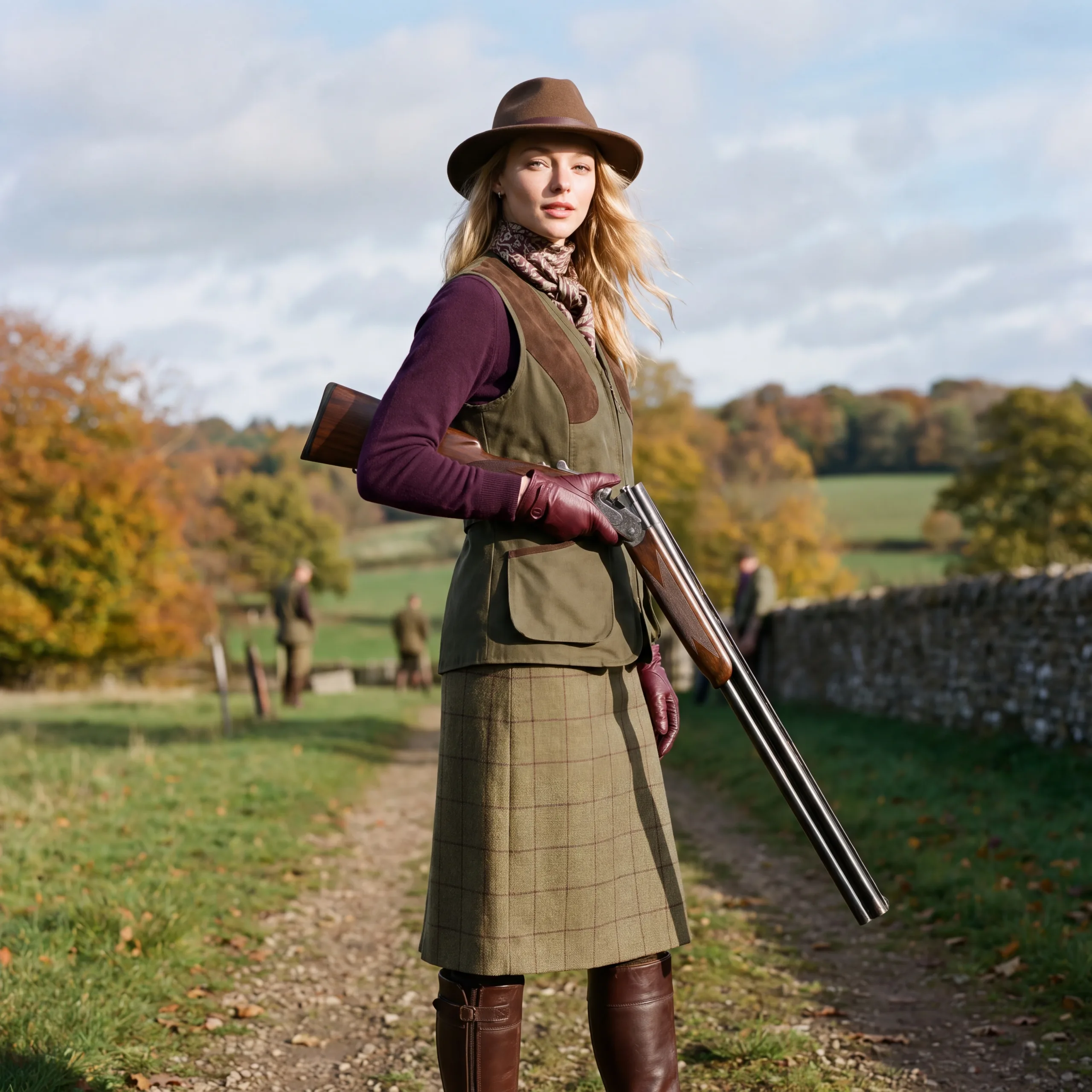
Plus-twos give a relatively neat fall below the knee. Plus-fours carry more fullness over the fastening. Both keep the hem clear of wet ground while allowing room through the seat and knees for crossing a bank or climbing into shoot transport. Wool hose cover the lower leg, with wellingtons or leather field boots chosen for the ground. In a sodden covert, freedom from a trailing trouser cuff is a considerable comfort.
A shooting coat needs to work with the body. Action pleats behind the shoulders release cloth as the gun rises. Bellows pockets provide space for cartridges and a gloved hand. Suede or leather shoulder patches resist wear and may improve purchase, while recoil cushioning depends on the padding beneath them. Test the coat fastened over the layers you intend to wear. A handsome jacket that catches the stock or pulls across the back becomes tiresome surprisingly quickly.
A waistcoat provides warmth and useful pockets when the outer coat comes off. Choose the cloth and layers for the forecast as carefully as for the occasion. Dense woollen tweed can shed a light shower, while wool helps manage moisture vapour and retain useful insulation when damp. Sustained rain still calls for a suitable waterproof layer. A coat that becomes saturated adds weight and takes time to dry. The day is considerably more enjoyable when one has dressed for the weather it brings.
Shirt, tie and the winter palette
For a man attending a formal driven day, a collared shirt and a silk or wool country tie should be treated as required unless the host expressly indicates otherwise. Tattersall checks, quiet stripes and restrained sporting motifs all sit naturally in the field. Women have greater latitude in the cut of their clothes and choice of neckwear, with a tie or neatly arranged cravat giving a composed finish.
A buttoned collar also reduces draughts and helps keep chaff and stray drips away from the neck. A high coat collar does the heavier work when the rain begins. The tie’s principal service remains social. There is something distinctly British about standing ankle-deep in mud while still having dressed for company.
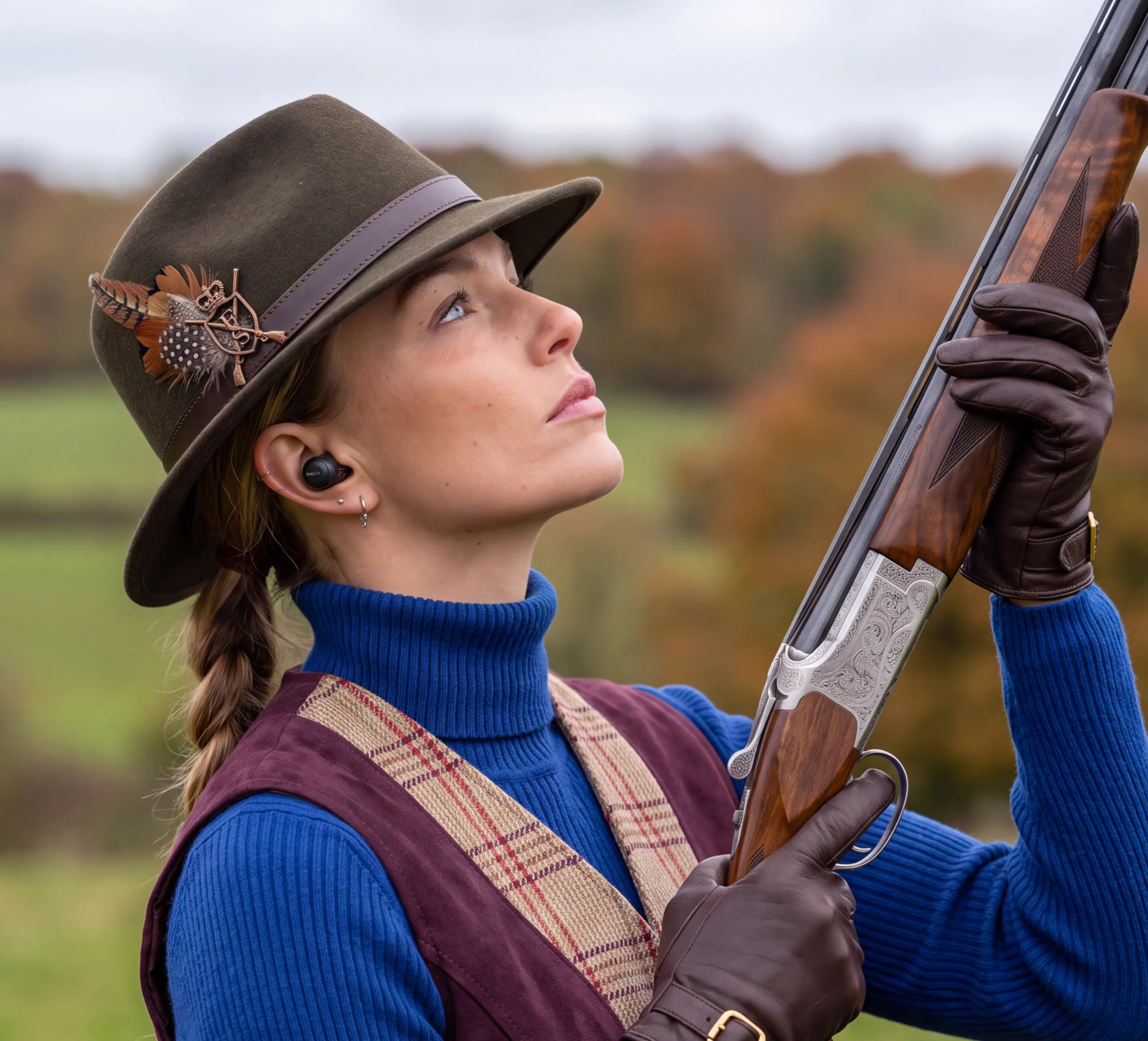
The palette belongs to the winter landscape. Olive, brown, slate and heather mixtures settle into hedge, woodland and stubble. Bright outer garments draw the eye and can unsettle approaching birds. A flat cap, modest felt trilby or shaped ladies’ shooting hat completes the outline. Gloves should preserve dexterity and fit comfortably with the gun. Eye and hearing protection must work with the hat as well as with the wearer.
When the shooting coat comes off
Think ahead to lunch as well as the first drive. Beneath a wet shooting coat, a presentable shirt and waistcoat or a tidy wool jumper will serve comfortably in many shoot lodges. For lunch in the house or a more formal dining room, a separate dry tweed jacket may be welcome. Check the arrangements with the host and pack accordingly.
Jamie also recommends bringing spare shoes. Muddy wellingtons can then stay at the door while dry country shoes take you comfortably through lunch or afternoon tea. If the day looks particularly wet, spare socks are a sensible companion. These small preparations make the move from field to table easy for guest and host alike.
II. From the courtyard to the first peg
Arrive ready
Punctuality means being ready at the appointed time. Allow for an unfamiliar estate entrance, a slow lane and the business of changing boots. A late Gun holds up people who may already have been working for hours and can cost the whole party a drive in the short winter day.
Greet the host, introduce yourself to unfamiliar Guns and acknowledge the shoot captain and keeper. Answer an invitation promptly, establish the meeting arrangements beforehand and mention any lack of driven experience while there is time to arrange an instructor or mentor. Confirm equipment and ammunition requirements in advance. The breakfast table is a poor place to discover that something essential is still at home.
Then listen to the briefing. The keeper’s account of permitted quarry, signals, hazards and the day’s arrangement applies to this ground in these conditions. Keep the telephone away and hear the whole of it. Clarifying a direction before departure is much less disruptive than improvising once the drive has begun.
The draw and the rotation
Pegs may be drawn from a bag, box or set of numbered cards. Your number determines your place in the line, while a peg card may record fellow Guns and the rotation for successive drives. A shoot might move everyone up two or three places after each drive. Follow the stated system, including how numbering runs across the ground.
On an eight-Gun day moving up two, a Gun beginning at peg seven would ordinarily go to peg one for the next drive. The host may make adjustments, so retain the card and pay attention. Rotation distributes opportunities across the day. Birds and wind retain a vote in the matter.
Accept the draw with good grace. Stand where directed and ask before making a material change of position. A few yards gained towards a promising flight line can alter the relationship between Guns, beaters and pickers-up. The numbered marker is part of the arrangement of the drive.
The keeper’s tip
Bring cash for the head keeper and establish the local expectation discreetly with your host. Tipping is customary, and the amount remains discretionary. Published rules of thumb differ. A guide of £40–£50 for the first hundred birds, followed by £10 for each additional fifty, would suggest £80–£90 per Gun on a 300-bird day. Treat that as an illustration, then follow informed guidance for the particular shoot.
Such calculations refer to the whole team’s bag. They also sit alongside the quality of the day, the keeper’s work and the hospitality of the shoot. A quiet peg gives little measure of the effort made on your behalf.
At the close, thank the keeper personally and hand over the tip discreetly, either in an envelope or folded within a handshake. If you have had a loader, ask beforehand about tipping them separately. Public announcements about generosity add remarkably little to the pleasure of receiving it.
III. The conduct of the peg
Safety as a common language
Carry the unloaded gun in its slip between drives, following the shoot’s directions. With a break-action gun, open it before withdrawing it fully so its condition can be checked, and confirm that the chambers are empty and the barrels clear. When carried unsleeved between shooting positions, it should be open and empty, with the muzzles controlled throughout. Before resleeving, check again that it is unloaded.
On reaching the peg, identify your neighbours, the beaters’ approach, the pickers-up and every restricted direction. Notice the lie of the land. On sloping ground, a bird appearing high from one position may be dangerously low relative to another Gun. Establish the safe arcs of fire before loading and follow the shoot’s start and finish signals.
For formal driven pheasants, the familiar requirement is clear sky around and behind the bird. That must sit alongside knowledge of the shot’s fall and everyone’s position. Keep fingers away from the trigger until preparing to fire, and maintain control of the muzzles through loading and movement. A safety catch assists careful handling. It cannot supply judgement.
Whose bird is it?
The social geography of a driven line is as important as its numbered pegs. Your birds are those properly presented to your position. A bird crossing in front of you towards a neighbour’s peg deserves the opportunity to reach that neighbour.
Repeatedly intercepting such birds is known as poaching. It is one of the quickest ways to diminish a day for the people beside you. Where lines curve or birds quarter, ownership can require judgement, and some shoots restrict crossing shots expressly. Watch the flight, understand the arrangement and be generous when the claim is doubtful.
Sir Ralph Payne-Gallwey, writing for young shooters in the late Victorian period, commended the courtesy of leaving an easy bird that would offer a better sporting opportunity to another Gun. The principle remains sound. The pleasure lies partly in seeing a neighbour take a bird well.
Leave room for the people beside you to enjoy their day.
If you have the shooting and a neighbour has little, generosity will be noticed. If you have little, keep your disappointment in proportion. The wind seldom becomes more obliging because someone complains about it.
Choosing a sporting bird
For Jamie, choosing a sporting bird begins with knowing which opportunities to leave alone.
“If a bird presents so little difficulty that I feel the result is a foregone conclusion, I would usually let it go,” he says. “I want to feel that I have the ability to take the shot, but that it will ask something of me. That is part of the pleasure of sport. We improve by testing ourselves, and the birds I remember are the ones that called on my concentration and judgement.”
That ambition carries a responsibility to recognise the limits of one’s shooting. A bird can be demanding through its speed, angle or line of flight while remaining within a Gun’s effective range.
“In contradistinction you have to be honest about your capabilities whilst challenging your abilities. There must be a sound expectation of a clean kill. The bird carries the consequences if you mistake wishful thinking for ability, and unnecessary wounding is too high a price for anyone’s ambition.”
The reward, in his view, lies in the particular moment that stays with you.
“A beautifully presented crosser, or a memorable left and right at forty metres and some, can give you something you want to write down. Years later, you might be sitting by the fire on a cold winter’s evening, with a glass of whisky, and remember the drive, the ground and those birds as clearly as if you were there again. That is a large part of why I shoot.”
He is equally clear about the place of food in that experience.
“The birds we shoot should go into the food chain, and we owe them proper care from the moment they fall. Our reason for taking part in a driven day is the sport itself, its traditions and the pleasure of testing our skill. In a survival situation, I would take the simplest opportunity to secure food. On a driven day, we have the privilege of choosing a bird that offers a worthwhile challenge.”
Take that pleasure quietly, and offer a word when a neighbour shoots a good bird. Keep your tally for the picking-up team and the proper account of the day. A memorable shot needs very little advertisement.
Misfires and marking birds
Reload with composure, keeping attention on muzzle direction and the people nearby. If a cartridge fails to fire, hold the gun securely in a safe direction and wait thirty seconds before opening it cautiously away from the body, following the manufacturer’s instructions and your loader’s guidance. An unusual report or reduced recoil requires an immediate stop and a check for obstruction before further firing. Let approaching birds go while the problem is resolved.
A bird showing signs of being hit is often described as pricked. Watch it carefully, note where it falls or disappears, and tell the picking-up team promptly. A useful mark refers to a definite feature and an approximate distance. Wounded game takes priority, with recovery during the drive where safe and practicable under the team’s direction.
At the finish signal, unload and show the pickers-up the birds you have marked. Gather empty cases and other litter before leaving. A tidy peg and a clear account of what fell are small but telling signs of a considerate Gun.
IV. The people and dogs who make the day
Beyond the line of Guns
A driven day depends on work extending far beyond the minutes spent shooting. Beaters move through difficult cover at a controlled pace. Stops help guide the drive. Loaders bring concentration and experience to the peg. Pickers-up read falling birds and work dogs through ground the Guns may scarcely see.
Learn names where possible and speak to these people during the breaks. A sincere observation about a good drive or a difficult retrieve means more than a general flourish of thanks delivered while climbing into a car. At elevenses, take an interest in the estate and the people who know it. Keep refreshments modest enough to preserve attention and judgement for the shooting ahead.
Bringing a dog
Ask permission before bringing a gundog. A formal driven day requires steadiness to shot and fall, quietness on the peg and immediate control. A dog that repeatedly runs in or needs constant correction distracts both its handler and neighbouring Guns. Keep leads and arrangements secure without attaching a dog to yourself while shooting.
Work with the estate’s picking-up team. Agree when your dog may retrieve and where it may go. Sending it into a search already being handled, or into ground intended for a later drive, can complicate the keeper’s work. After the drive, account for your birds with the pickers-up before moving on. The dogs are there to complete the day properly.
V. The last drive and the return to the house
The bag and the offered brace
Where the bag is laid out for the company, join the host and keeper, stand attentively and acknowledge the result with respect. British practice varies between estates. Some gather formally, others announce the total more simply. Follow the host’s lead on any words or observance.
Throughout, handle birds as food. Lay them carefully and keep them clean, allowing heat to disperse. The needs of cooling and proper storage govern what happens next, including the timing of photographs. A well-run day has arrangements for the game long before the first drive.
Accept the offered brace graciously, whether in feather or oven-ready, and make provision to take it home properly. If onward travel presents a difficulty, arrange a recipient or another practical solution with the host. Cooking the birds completes a connection that begins on the peg. Ask about preparation if you need help, and bring suitable cool transport for the journey.
Tea, dinner and the letter afterwards
The day may end with tea, a late lunch or dinner at the house. Change out of wet field clothes as appropriate, secure the gun, settle the dog and arrive when expected. Confirm evening dress beforehand. Field clothes and the clothes required for a formal dinner may be different.
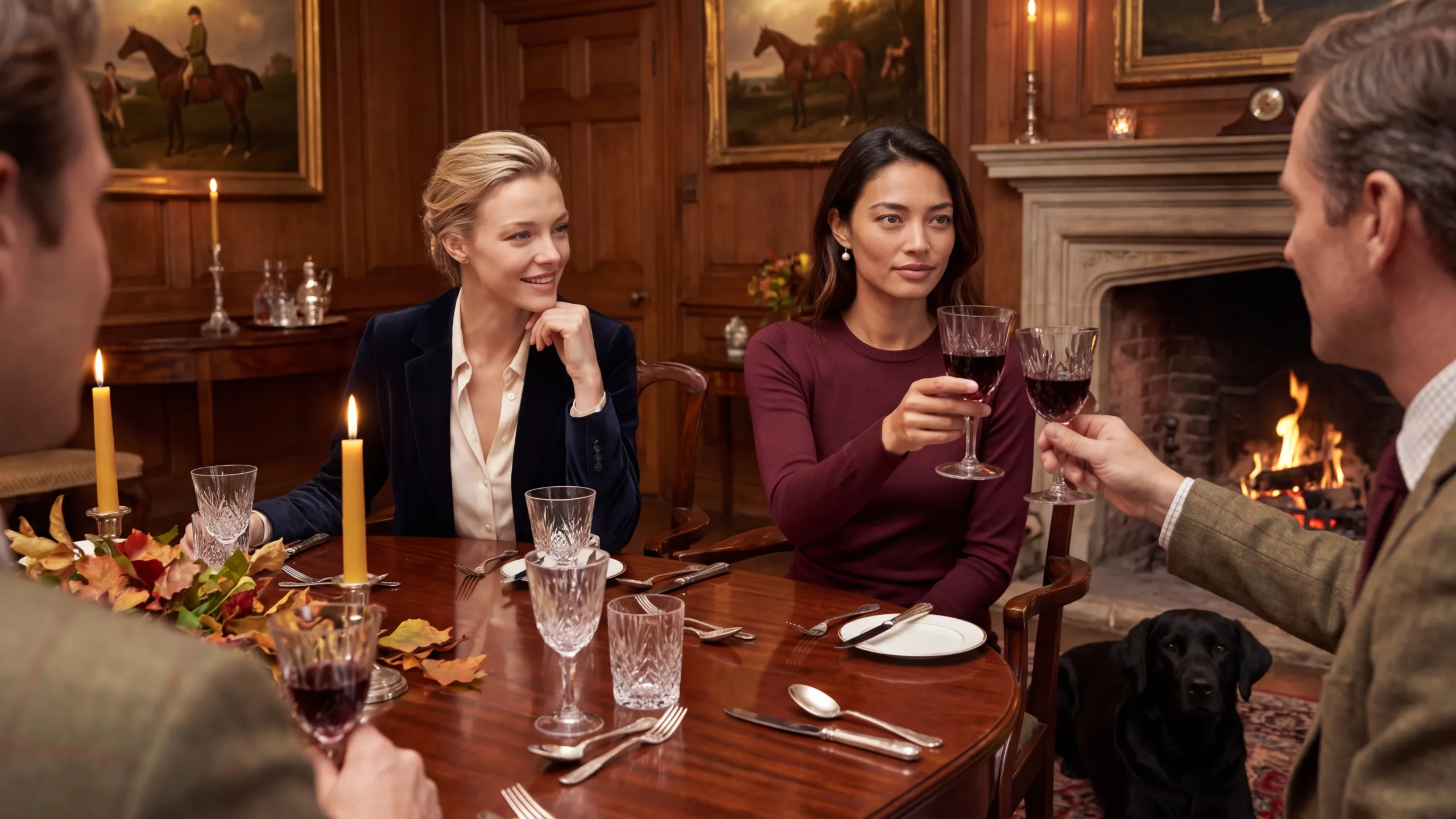
Be good company across the table. Listen to unfamiliar people, put away the telephone and allow the conversation to travel beyond shooting. When the host or captain speaks, give them the room. Join any toast, and thank the household and catering staff as well as the host. If a practical concern needs raising, do so privately with someone able to address it.
After a private invitation, send the host a personal thank-you soon afterwards. A handwritten bread-and-butter letter remains particularly welcome when someone has entertained you at their shoot or in their home. Mention something specific, perhaps a drive, a retrieve or a kindness remembered from the house. The details show that you attended to the day as a whole.
For a bought day, a formal letter carries a different expectation. Thank the keeper and team personally before leaving; a subsequent note to the estate or organiser is a welcome voluntary gesture, particularly after exceptional hospitality. The private guest’s obligation to write belongs to the personal invitation and the generosity behind it.
The pleasure of the shared day
By the time the last car leaves, the courtyard has lost its frost. There are boot marks near the door, tired dogs settling into their bedding and work still to finish in the game larder. The Guns take away different memories. One recalls a pheasant over the tallest oak, another a conversation at lunch, another the sight of a dog finding a runner far beyond the hedge.
Good etiquette gives all those experiences room to happen. It allows people to trust their neighbours, staff to do their work and a host to enjoy the company they have assembled. On a private invitation, being remembered as a considerate guest may bring the pleasure of being asked again. On a bought day, the same good conduct adds to the experience of everyone present. For Foyers Sporting, that shared understanding is part of what makes a British driven day worth arranging.